
Goldschmidt 2025 Conference Registration
Elemental Scientific Special Luncheon at Goldschmidt 2025
Join Elemental Scientific on July 9, 2025 for an exclusive luncheon during the Goldschmidt Conference in Prague, Czech Republic. This special event will feature expert presentations and insights on the latest innovations in laboratory automation for geochemical analysis.
Our guest speakers represent a diverse range of geochemical disciplines—from isotope geochemistry and paleoenvironmental reconstruction to biomedical and anthropological applications. Learn how researchers are automating workflow and increasing sample throughput to accelerate discovery, enabling deeper exploration of both established and emerging research areas.
Dr. Michael Kipp - (Duke University)
- Dr. Michael Kipp will share how his lab applies automation to generate high-resolution, multi-proxy records of ancient Earth conditions.
Dr. Gwyneth Gordon - (Arizona State University)
- Dr. Gwyneth Gordon will highlight automation strategies at ASU’s METAL facility, which have enabled the analysis of more than 10,000 samples across disciplines from bioanthropology to medical geochemistry.
Dr. Bence Paul - (Elemental Scientific Lasers / iolite Software)
- Dr. Bence Paul will showcase new computer vision and software tools that accelerate LA-ICPMS and LIBS experiment design with greater intelligence and less user bias.
Don’t miss this opportunity to connect with peers, enjoy lunch, and explore how automation is reshaping the future of geochemical research.
Conference Speakers
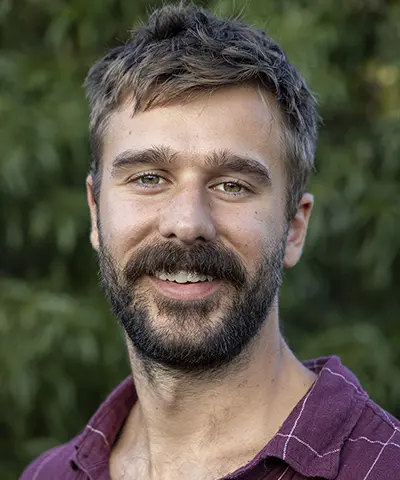

Michael Kipp, Assistant Professor of Geochemistry
Division of Earth and Climate Sciences, Duke University
Mike is an isotope geochemist and Earth historian. He uses geochemical proxies to quantify nutrient and oxygen availability in past environments. Before joining Duke, he obtained his PhD from the University of Washington in 2019 and was as a postdoctoral fellow at Caltech from 2019 to 2023.
Improving Workflow for Geochemical Analysis Through Automation
Our understanding of ancient Earth environments is data-limited. While the development of novel geochemical proxies for past environmental conditions has exploded in recent years, the throughput of such analyses has not kept up, leaving considerable room to improve the resolution of proxy records. Here I will discuss the ways that our lab is using automation to construct new multi-proxy records.
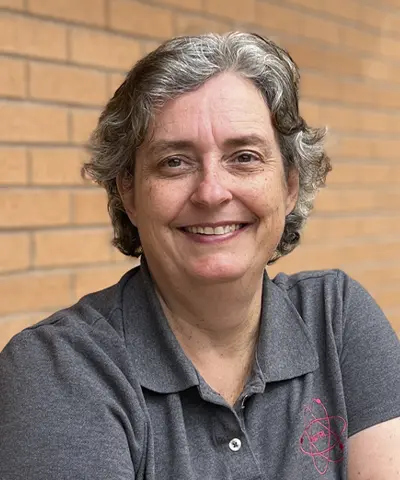

Dr. Gwyneth Gordon, Assistant Research Professor
School of Earth & Space Exploration, Arizona State University
Gwyn applies isotope geochemistry to marine paleoredox, anthropology, and medicine. She received her PhD from Yale on Os isotopes. In addition to research, she manages ASU’s METAL (Metals, Environmental, and Terrestrial Analytical Laboratory) core facility supporting researchers in many disciplines.
Improving Workflow for Geochemical Analysis Through Automation
Bioanthropology requires large isotopic data sets over populations, as well as high spatial resolution isoscapes for inferences about migration. Fe, Ca, Cu, and Zn isotopic research into cancer, osteoporosis, and metabolic disorders also demands high sample throughput. I will outline METAL’s automation workflow that has measured more than 10,000 radiogenic strontium samples and large datasets of urine and blood for calcium isotopes researching bone loss treatments.
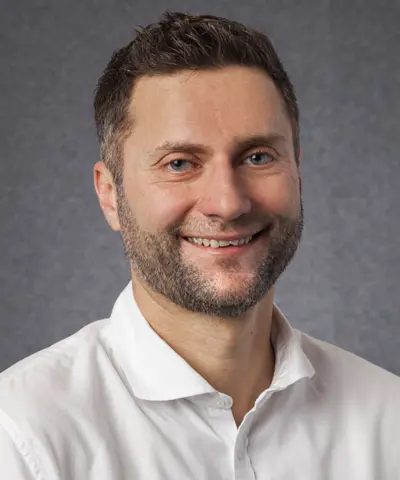
Dr Bence Paul, iolite Software, Elemental Scientific Lasers, LLC
School of Geography, Earth and Atmospheric Sciences, The University of Melbourne, Parkville, Victoria, Australia
Bence is a geochemist specializing in LA-ICP-MS and geochemical data processing. His PhD was focused on Pb isotopes in melt inclusions. Before joining Elemental Scientific Lasers as the iolite Product Manager, Bence was a senior researcher at the University of Melbourne.
Computer Vision Tools for Intelligent LA-ICP-MS and LIBS Experiment Creation
We present new software tools to automate LA-ICP-MS experiment creation such as image analysis for automated pattern placement, trainable segmentation of samples, and feedback on ablation parameters. Importantly, these tools include streamlined integration with instrument control software. We demonstrate a significant reduction in experiment setup time, enabling a higher sample throughput and mitigating potential user bias.
Catered Lunch Courtesy of Elemental Scientific
Registration for the luncheon is now closed online. We will still accept registrations at the conference, if space is available. Please stop by our booths 25 & 26 to inquire.
Luncheon Details
Date: Wednesday July 9th
Time: 1:00pm - 2:00pm
Location: Chamber Hall
About Goldschmidt
The Goldschmidt Conferences™ were started in 1988 by the international Geochemical Society (GS) to provide a forum for its members to discuss their latest research. The conference is named in honor of Victor M. Goldschmidt (1888 - 1947), whose classification of the behavior of the elements in the Earth and meteorites laid the basis of modern geochemisty. Each year, the conference brings together thousands of scientists from throughout the world to talk about subjects including the origin of the Earth and planets, the chemical processes that have shaped Earth's evolution over time, the interconnections between life and the physical world, the search for new resources, and the environmental challenges facing today's world.
In its longstanding involvement with the Goldschmidt Conference, the GS was joined early on by the European Association of Geochemistry (EAG). Since that time, responsibility for organization and hosting of the conference has alternated between the two societies, with the EAG overseeing meetings held in odd-numbered years, and the GS those in even-numbered years. The conference has also benefitted greatly from the involvement of other societies, notably the Geochemical Society of Japan and the Mineralogical Society of America. Over the years, the Goldschmidt conference has travelled widely, across North America, Japan, Europe and Australia, and has benefitted from the involvement of all of its associated societies from throughout the world. However the real key to the continuing success of the Goldschmidt conference is the energy and enthusiasm of the scientists responsible for its organization.